
Contents
-
Introduction .
-
Definition.
-
History .
-
How Do Robots Work? .
-
Advantages and Disadvantages .
- Robots Applications .
- World Famous Robots .
- Conclusion .
-
References .
Introduction
Robotics is the field that allows the construction of robots. They are made to perform different jobs in place of humans they are more than simple computers: they must be able to sense and react to changes in their surroundings.
Scientists agree that research in robotics is expanding, will machines replace humans? Hardly, but robots are already in many places in our daily lives. But they are not capable to perform every job, so scientists are continuing to develop robots.
Definition
" The word ‘robot’ is often applied to any device that works automatically and performs functions normally ascribed to humans. " [1]
“Robotics is the branch of technology that deals with the design, construction, operation and application of robots and computer systems for their control, sensory feedback, and information processing”.[2]
History
" Engineers tried to invent a robot or a machine that works without help even before the AD centuries.[1]
the most notably attempts are:
320 BC
Greek philosopher Aristotle made this famous quote:
“If every tool, when ordered, or even of its own accord, could do the work that befits it... Then there would be no need either of apprentices for the master workers or of slaves for the lords.”
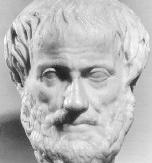
Figure1: 320 BC
(1495) :Around 1495 Leonardo da Vinci sketched plans for a humanoid robot. From 1700 to 1900:
A number of life-sized automatons were created including famous mechanical duck made by
Jacques de Vaucanson that could crane its neck, flap its wings and swallow food.
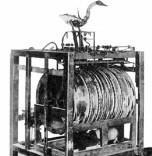
Figure2: Robots in 1700 - 1900
1932
The first true robot toy was produced in Japan. The ‘Lilliput’ was a wind-up toy which walked. It was made from tinplate and stood just 15 cm tall.

Figure3: first true robot
1941
A science fiction writer Isaac Asimov writes the story ‘Liar!’ in which he describes the Three Laws of Robotics:
1. A robot may not injure a human being or, through inaction, allow a human being to come to harm.
2. A robot must obey any orders given to it by human beings, except where such orders would conflict with the First Law.
3. A robot must protect its own existence as long as such protection does not conflict with the First or Second Law. " [3]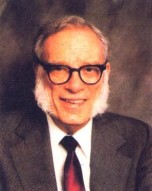
Figure4: Isaac Asimov
How Do Robots Work?
" Robot must include three key aspects in some form or another.
1. Sensing: using the sensors
2. Planning: to use sensors for a particular purpose.
3. Interaction: using existing sensors for a specific reaction. " [1]
" Most robots are designed to take information from the environment and perform a task based on that information. A sensor can tell the robot that an obstacle is there. The brain gets input from sensors. Programming tells a robot how to interpret data that it receives from the sensors and what to do about it. " [4]
Advantages
• They are more accurate than humans.
• Lift heavy equipments.
• Keep doing the same task 24/7.
• They are peaceful unless they are programmed to harm.
Disadvantages
• Only can be fixed by trained people.
• Perform humans' jobs, which might ruin people’s lives.
• Hard to program and high cost to produce them.
• They cannot recharge themselves.
Robotics Applications
" Robotics is a multidisciplinary field of technology that recently receives extensive attention from robotics community.
Robots in Industry:
Modern industrial robots can do that 24 hours a day for years on end with no failures. They are programmed once and then repeat that exact same task for years. Robots cut and shape fabricated parts, assemble machinery and inspect manufactured parts.Intelligent Systems:
is depends mainly on making the machine capable of dealing with the surrounding elements. The applications make a new robotic generation that is capable based on certain instructions and out side effects to take the decision of moving or doing actions.Robots in Medicine:
robots are able to perform major operations while only making small incisions, patients receive many benefits. Robots are used to perform heart surgery without opening patient’s chests. They can also monitor the condition of patients.Robots in Recreations and Sports:
Making a robot that has a similar overall appearance with humans called humanoid robot, based on human body, allowing interaction with made-for-human tools or environments.
Robots in Space:
Applications outside the Earth's atmosphere are clearly a good fit for robots. It is dangerous for humans to get to space. Keeping robots operating reliably in space presents some unique challenges for engineers. Robots in space can do all the work that humans can’t do there. " [5]World Famous Robots:
" 1.Asimo:
A humanoid robot created by Honda .the robots resembles a small astronaut wearing a backpack and can walk on two feet . The name is an acronym for “Advanced Step in Innovation Mobility”.
2. Kismet:
Kismet is a robot which was made in 1990s .The name comes from meaning “fate” or “luck" . Kismet contains input devices. Kismet simulates emotions through various facial expressions, vocalization, and movements. Facial expressions are created through movements of the ears, eyebrows, eyelids, and head. The cost is US$25,000.
3. iCub:
A small-size humanoid robot. Designed by the Robot Cup Consortium. The main goal is to study cognition through the implementation of biological motivated algorithms.
4. Actroid:
A humanoid robot developed by Osaka University.It was first unveiled at the 2003 International Robot Exposition. Different versions have been produced since then. The robot’s appearance is like a woman. It mimics lifelike functions. " [6]
Conclusion
Robots are useful in many ways. They encourage economy because businesses need to be efficient to keep up with the industry competition. Therefore, having robots helps businesspeople to be competitive. In the future, there will be new ways to use robots which will bring new hopes and potentials.
References
· [1] Seraj. (2010, Des 27), “What do you know about robots”, Roblogia.[online].
Available: http://www.robologia.com/2010/about-robot/
· [2] Wikipedia. (2011, May 5) “Robotics”, (Wikipedia). [online].
Available: http://en.wikipedia.org/wiki/Robotics
· [3] sciencekids. (2012)," The History of Robotics ".sciencekids. [Online]
Available: http://www.sciencekids.co.nz/sciencefacts/technology/historyofrobotics.html
· [4] Carey, D. (2009, June 9), “How do Robots work”, Life123.[online].
Available: http://www.life123.com/technology/computer-hardware/robots/how-do-robots-work.shtml
· [5] KACST (2012), “Robots Applications”, King Abdulaziz City for Science and Technology.[online]
Available: http://www.kacst.edu.sa/en/depts/NCRIS/Pages/research.aspx
· [6] Jitendra. (2012, April 21), “World Famous Robots“ ,Jitu Technology.[online]
Available: http://www.jitutechnology.com/word-famous-robots/

|
Robotics Research sا.docx Size : 287.929 Kb Type : docx |
